Mozart’s most popular opera is a deeply humane story of adventure with heavenly music.
Opera in two acts
Libretto by Emanuel Schikaneder
Performed in German with German and English surtitles (Spoken dialogue is not translated word for word.)
Premiere
1. November 2020
Dates & Cast
- Conductor Katharina Müllner (25.afternoon, 25.evening October, 02., 15.afternoon, 15.evening November 2026, 17., 20. March 2027), Killian Farrell (28.afternoon, 28.evening March, 09. April 2027), Marcus Merkel (08., 10., 12. February 2027)
- Staging Josef E. Köpplinger
- Set Design Walter Vogelweider
- Costume Design Dagmar Morell
- Lighting Design Fabio Antoci
- Choreography Ricarda Regina Ludigkeit
- Choir Jan Hoffmann
- Dramaturgy Johann Casimir Eule
- Sarastro Andreas Bauer Kanabas (25. October 2026), Georg Zeppenfeld (25. October, 15. November 2026), Tilmann Rönnebeck (02., 15. November 2026, 08., 10., 12. February, 09. April, 03., 06., 23. May 2027), Goran Jurić (17., 20., 28. March, 06., 23. May 2027), N.N. (28. March, 07. May 2027)
- Königin der Nacht Annija Adamsone (25.afternoon, 25.evening October 2026, 17., 20. March, 09. April, 03., 07. May 2027), Jasmin Delfs (02., 15. November 2026, 08. February, 28. March, 06., 23. May 2027), Maria Perlt-Gärtner (15. November 2026, 10., 12. February, 28. March, 06., 23. May 2027)
- Pamina Magdalena Lucjan (25. October, 02. November 2026, 08., 10., 12. February, 23. May 2027), Katharina Konradi (25. October, 15. November 2026, 17., 28. March 2027), Louise McClelland Jacobsen (15. November 2026, 20., 28. March, 09. April, 06., 23. May 2027), N.N. (03., 06., 07. May 2027)
- Tamino Mario Lerchenberger (25. October, 15. November 2026, 06., 23. May 2027), Tomislav Mužek (25. October 2026), James Ley (02., 15. November 2026, 08., 10., 12. February, 17., 20., 28. March 2027), N.N. (28. March, 09. April 2027), Johan Krogius (03., 06., 07., 23. May 2027)
- Papageno Michael Nagl (25. October, 02., 15. November 2026, 23. May 2027), Danylo Matviienko (25. October, 15. November 2026, 17., 20., 28. March, 03., 06., 07. May 2027), Anton Beliaev (08., 10., 12. February, 28. March, 06. May 2027), Daniel Gutmann (09. April 2027)
- Erste Dame Elena Gorshunova (25. October 2026), Ute Selbig (25. October, 02., 15. November 2026), Natasha Gesto (15. November 2026, 28. March, 09. April, 03., 06., 07., 23. May 2027), N.N. (10., 12. February, 06., 23. May 2027)
- Zweite Dame Winona Martin (25. October, 15. November 2026, 03., 06., 07., 23. May 2027), Nicole Chirka (25. October, 02., 15. November 2026, 08., 10., 12. February, 17., 28. March, 09. April, 06., 23. May 2027), Sabine Brohm (20., 28. March 2027)
- Dritte Dame Christa Mayer (25.afternoon, 25.evening October, 15. November 2026, 17. March, 09. April 2027), Ekaterina Chayka-Rubinstein (02., 15. November 2026, 03., 06., 07., 23. May 2027), Michal Doron (08., 10., 12. February, 20., 28.afternoon, 28.evening March, 06., 23. May 2027)
- Monostatos Timothy Oliver (25.afternoon, 25.evening October, 15. November 2026, 17., 20., 28.afternoon, 28.evening March, 09. April, 03. May 2027), Jongwoo Hong (02., 15. November 2026, 08., 10., 12. February, 06. May 2027)
- Sprecher Markus Marquardt (25. October 2026, 28. March, 06. May 2027), Alexander Grassauer (25. October 2026, 08. February, 07., 23. May 2027), Martin-Jan Nijhof (02., 15.afternoon, 15.evening November 2026, 17., 20., 28. March, 09. April, 03., 06. May 2027), N.N. (10., 12. February, 23. May 2027)
- Papagena Dalia Medovnikov (25. October, 15.afternoon, 15.evening November 2026, 08., 10., 12. February, 03., 06., 07., 23. May 2027), Christiane Hossfeld (25. October, 02. November 2026, 06., 23. May 2027), Shannon Crowley (17., 20., 28.afternoon, 28.evening March, 09. April 2027)
- Erster Priester David Roy (25.afternoon, 25.evening October, 02., 15.afternoon, 15.evening November 2026, 17., 20. March 2027), Metehan Köklü (08., 10., 12. February, 09. April, 03., 06.afternoon, 06.evening, 07., 23.afternoon, 23.evening May 2027)
- Zweiter Priester Jin Yu (25.afternoon, 25.evening October, 02., 15.afternoon, 15.evening November 2026, 09. April, 03., 06.afternoon, 06.evening, 07., 23.afternoon, 23.evening May 2027), N.N. (08., 10., 12. February 2027)
- Erster Geharnischter Jürgen Müller (25.afternoon, 25.evening October 2026), Simeon Esper (02., 15.afternoon, 15.evening November 2026), Gerald Hupach (08., 10., 12. February, 09. April, 03., 06.afternoon, 06.evening, 07., 23.afternoon, 23.evening May 2027)
- Zweiter Geharnischter Metehan Köklü (25.afternoon, 25.evening October, 02. November 2026, 17., 20., 28.afternoon, 28.evening March 2027), Oleksandr Pushniak (15.afternoon, 15.evening November 2026, 08., 10., 12. February, 09. April, 03., 06.afternoon, 06.evening, 23.afternoon, 23.evening May 2027), Matthias Henneberg (07. May 2027)
- Drei Knaben Tölzer Knabenchor (25.afternoon, 25.evening October 2026, 08., 10., 12. February, 09. April 2027), Dresdner Kreuzchor (02. November 2026, 17., 20. March, 23.afternoon, 23.evening May 2027), Aurelius Sängerknaben Calw (28.afternoon, 28.evening March 2027), Kapellknabe (15.afternoon, 15.evening November 2026, 03., 06.afternoon, 06.evening, 07. May 2027)
- Conductor Katharina Müllner
- Staging Josef E. Köpplinger
- Set Design Walter Vogelweider
- Costume Design Dagmar Morell
- Lighting Design Fabio Antoci
- Choreography Ricarda Regina Ludigkeit
- Choir Jan Hoffmann
- Dramaturgy Johann Casimir Eule
Sächsischer Staatsopernchor Dresden
Generously supported by the Stiftung Semperoper – Förderstiftung
- Sarastro Andreas Bauer Kanabas
- Königin der Nacht Annija Adamsone
- Pamina Magdalena Lucjan
- Tamino Mario Lerchenberger
- Papageno Michael Nagl
- Erste Dame Elena Gorshunova
- Zweite Dame Winona Martin
- Dritte Dame Christa Mayer
- Monostatos Timothy Oliver
- Sprecher Markus Marquardt
- Papagena Dalia Medovnikov
- Erster Priester David Roy
- Zweiter Priester Jin Yu
- Erster Geharnischter Jürgen Müller
- Zweiter Geharnischter Metehan Köklü
- Drei Knaben Tölzer Knabenchor
- Conductor Katharina Müllner
- Staging Josef E. Köpplinger
- Set Design Walter Vogelweider
- Costume Design Dagmar Morell
- Lighting Design Fabio Antoci
- Choreography Ricarda Regina Ludigkeit
- Choir Jan Hoffmann
- Dramaturgy Johann Casimir Eule
Sächsischer Staatsopernchor Dresden
Generously supported by the Stiftung Semperoper – Förderstiftung
- Sarastro Georg Zeppenfeld
- Königin der Nacht Annija Adamsone
- Pamina Katharina Konradi
- Tamino Tomislav Mužek
- Papageno Danylo Matviienko
- Erste Dame Ute Selbig
- Zweite Dame Nicole Chirka
- Dritte Dame Christa Mayer
- Monostatos Timothy Oliver
- Sprecher Alexander Grassauer
- Papagena Christiane Hossfeld
- Erster Priester David Roy
- Zweiter Priester Jin Yu
- Erster Geharnischter Jürgen Müller
- Zweiter Geharnischter Metehan Köklü
- Drei Knaben Tölzer Knabenchor
- Conductor Katharina Müllner
- Staging Josef E. Köpplinger
- Set Design Walter Vogelweider
- Costume Design Dagmar Morell
- Lighting Design Fabio Antoci
- Choreography Ricarda Regina Ludigkeit
- Choir Jan Hoffmann
- Dramaturgy Johann Casimir Eule
Sächsischer Staatsopernchor Dresden
Generously supported by the Stiftung Semperoper – Förderstiftung
- Sarastro Tilmann Rönnebeck
- Königin der Nacht Jasmin Delfs
- Pamina Magdalena Lucjan
- Tamino James Ley
- Papageno Michael Nagl
- Erste Dame Ute Selbig
- Zweite Dame Nicole Chirka
- Dritte Dame Ekaterina Chayka-Rubinstein
- Monostatos Jongwoo Hong
- Sprecher Martin-Jan Nijhof
- Papagena Christiane Hossfeld
- Erster Priester David Roy
- Zweiter Priester Jin Yu
- Erster Geharnischter Simeon Esper
- Zweiter Geharnischter Metehan Köklü
- Drei Knaben Dresdner Kreuzchor
- Conductor Katharina Müllner
- Staging Josef E. Köpplinger
- Set Design Walter Vogelweider
- Costume Design Dagmar Morell
- Lighting Design Fabio Antoci
- Choreography Ricarda Regina Ludigkeit
- Choir Jan Hoffmann
- Dramaturgy Johann Casimir Eule
Sächsischer Staatsopernchor Dresden
Generously supported by the Stiftung Semperoper – Förderstiftung
- Sarastro Tilmann Rönnebeck
- Königin der Nacht Jasmin Delfs
- Pamina Katharina Konradi
- Tamino Mario Lerchenberger
- Papageno Michael Nagl
- Erste Dame Natasha Gesto
- Zweite Dame Winona Martin
- Dritte Dame Ekaterina Chayka-Rubinstein
- Monostatos Jongwoo Hong
- Sprecher Martin-Jan Nijhof
- Papagena Dalia Medovnikov
- Erster Priester David Roy
- Zweiter Priester Jin Yu
- Erster Geharnischter Simeon Esper
- Zweiter Geharnischter Oleksandr Pushniak
- Drei Knaben Kapellknabe
- Conductor Katharina Müllner
- Staging Josef E. Köpplinger
- Set Design Walter Vogelweider
- Costume Design Dagmar Morell
- Lighting Design Fabio Antoci
- Choreography Ricarda Regina Ludigkeit
- Choir Jan Hoffmann
- Dramaturgy Johann Casimir Eule
Sächsischer Staatsopernchor Dresden
Generously supported by the Stiftung Semperoper – Förderstiftung
- Sarastro Georg Zeppenfeld
- Königin der Nacht Maria Perlt-Gärtner
- Pamina Louise McClelland Jacobsen
- Tamino James Ley
- Papageno Danylo Matviienko
- Erste Dame Ute Selbig
- Zweite Dame Nicole Chirka
- Dritte Dame Christa Mayer
- Monostatos Timothy Oliver
- Sprecher Martin-Jan Nijhof
- Papagena Dalia Medovnikov
- Erster Priester David Roy
- Zweiter Priester Jin Yu
- Erster Geharnischter Simeon Esper
- Zweiter Geharnischter Oleksandr Pushniak
- Drei Knaben Kapellknabe
- Conductor Marcus Merkel
- Staging Josef E. Köpplinger
- Set Design Walter Vogelweider
- Costume Design Dagmar Morell
- Lighting Design Fabio Antoci
- Choreography Ricarda Regina Ludigkeit
- Choir Jan Hoffmann
- Dramaturgy Johann Casimir Eule
Sächsischer Staatsopernchor Dresden
Generously supported by the Stiftung Semperoper – Förderstiftung
- Sarastro Tilmann Rönnebeck
- Königin der Nacht Jasmin Delfs
- Pamina Magdalena Lucjan
- Tamino James Ley
- Papageno Anton Beliaev
- Zweite Dame Nicole Chirka
- Dritte Dame Michal Doron
- Monostatos Jongwoo Hong
- Sprecher Alexander Grassauer
- Papagena Dalia Medovnikov
- Erster Priester Metehan Köklü
- Zweiter Priester N.N.
- Erster Geharnischter Gerald Hupach
- Zweiter Geharnischter Oleksandr Pushniak
- Drei Knaben Tölzer Knabenchor
- Conductor Marcus Merkel
- Staging Josef E. Köpplinger
- Set Design Walter Vogelweider
- Costume Design Dagmar Morell
- Lighting Design Fabio Antoci
- Choreography Ricarda Regina Ludigkeit
- Choir Jan Hoffmann
- Dramaturgy Johann Casimir Eule
Sächsischer Staatsopernchor Dresden
Generously supported by the Stiftung Semperoper – Förderstiftung
- Sarastro Tilmann Rönnebeck
- Königin der Nacht Maria Perlt-Gärtner
- Pamina Magdalena Lucjan
- Tamino James Ley
- Papageno Anton Beliaev
- Erste Dame N.N.
- Zweite Dame Nicole Chirka
- Dritte Dame Michal Doron
- Monostatos Jongwoo Hong
- Sprecher N.N.
- Papagena Dalia Medovnikov
- Erster Priester Metehan Köklü
- Zweiter Priester N.N.
- Erster Geharnischter Gerald Hupach
- Zweiter Geharnischter Oleksandr Pushniak
- Drei Knaben Tölzer Knabenchor
- Conductor Marcus Merkel
- Staging Josef E. Köpplinger
- Set Design Walter Vogelweider
- Costume Design Dagmar Morell
- Lighting Design Fabio Antoci
- Choreography Ricarda Regina Ludigkeit
- Choir Jan Hoffmann
- Dramaturgy Johann Casimir Eule
Sächsischer Staatsopernchor Dresden
Generously supported by the Stiftung Semperoper – Förderstiftung
- Sarastro Tilmann Rönnebeck
- Königin der Nacht Maria Perlt-Gärtner
- Pamina Magdalena Lucjan
- Tamino James Ley
- Papageno Anton Beliaev
- Erste Dame N.N.
- Zweite Dame Nicole Chirka
- Dritte Dame Michal Doron
- Monostatos Jongwoo Hong
- Sprecher N.N.
- Papagena Dalia Medovnikov
- Erster Priester Metehan Köklü
- Zweiter Priester N.N.
- Erster Geharnischter Gerald Hupach
- Zweiter Geharnischter Oleksandr Pushniak
- Drei Knaben Tölzer Knabenchor
- Conductor Katharina Müllner
- Staging Josef E. Köpplinger
- Set Design Walter Vogelweider
- Costume Design Dagmar Morell
- Lighting Design Fabio Antoci
- Choreography Ricarda Regina Ludigkeit
- Choir Jan Hoffmann
- Dramaturgy Johann Casimir Eule
Sächsischer Staatsopernchor Dresden
Generously supported by the Stiftung Semperoper – Förderstiftung
- Sarastro Goran Jurić
- Königin der Nacht Annija Adamsone
- Pamina Katharina Konradi
- Tamino James Ley
- Papageno Danylo Matviienko
- Zweite Dame Nicole Chirka
- Dritte Dame Christa Mayer
- Monostatos Timothy Oliver
- Sprecher Martin-Jan Nijhof
- Papagena Shannon Crowley
- Erster Priester David Roy
- Zweiter Geharnischter Metehan Köklü
- Drei Knaben Dresdner Kreuzchor
- Conductor Katharina Müllner
- Staging Josef E. Köpplinger
- Set Design Walter Vogelweider
- Costume Design Dagmar Morell
- Lighting Design Fabio Antoci
- Choreography Ricarda Regina Ludigkeit
- Choir Jan Hoffmann
- Dramaturgy Johann Casimir Eule
Sächsischer Staatsopernchor Dresden
Generously supported by the Stiftung Semperoper – Förderstiftung
- Sarastro Goran Jurić
- Königin der Nacht Annija Adamsone
- Pamina Louise McClelland Jacobsen
- Tamino James Ley
- Papageno Danylo Matviienko
- Zweite Dame Sabine Brohm
- Dritte Dame Michal Doron
- Monostatos Timothy Oliver
- Sprecher Martin-Jan Nijhof
- Papagena Shannon Crowley
- Erster Priester David Roy
- Zweiter Geharnischter Metehan Köklü
- Drei Knaben Dresdner Kreuzchor
- Conductor Killian Farrell
- Staging Josef E. Köpplinger
- Set Design Walter Vogelweider
- Costume Design Dagmar Morell
- Lighting Design Fabio Antoci
- Choreography Ricarda Regina Ludigkeit
- Choir Jan Hoffmann
- Dramaturgy Johann Casimir Eule
Sächsischer Staatsopernchor Dresden
Generously supported by the Stiftung Semperoper – Förderstiftung
- Sarastro Goran Jurić
- Königin der Nacht Jasmin Delfs
- Pamina Louise McClelland Jacobsen
- Tamino N.N.
- Papageno Danylo Matviienko
- Erste Dame Natasha Gesto
- Zweite Dame Sabine Brohm
- Dritte Dame Michal Doron
- Monostatos Timothy Oliver
- Sprecher Martin-Jan Nijhof
- Papagena Shannon Crowley
- Zweiter Geharnischter Metehan Köklü
- Drei Knaben Aurelius Sängerknaben Calw
- Conductor Killian Farrell
- Staging Josef E. Köpplinger
- Set Design Walter Vogelweider
- Costume Design Dagmar Morell
- Lighting Design Fabio Antoci
- Choreography Ricarda Regina Ludigkeit
- Choir Jan Hoffmann
- Dramaturgy Johann Casimir Eule
Sächsischer Staatsopernchor Dresden
Generously supported by the Stiftung Semperoper – Förderstiftung
- Sarastro N.N.
- Königin der Nacht Maria Perlt-Gärtner
- Pamina Katharina Konradi
- Tamino James Ley
- Papageno Anton Beliaev
- Zweite Dame Nicole Chirka
- Dritte Dame Michal Doron
- Monostatos Timothy Oliver
- Sprecher Markus Marquardt
- Papagena Shannon Crowley
- Zweiter Geharnischter Metehan Köklü
- Drei Knaben Aurelius Sängerknaben Calw
- Conductor Killian Farrell
- Staging Josef E. Köpplinger
- Set Design Walter Vogelweider
- Costume Design Dagmar Morell
- Lighting Design Fabio Antoci
- Choreography Ricarda Regina Ludigkeit
- Choir Jan Hoffmann
- Dramaturgy Johann Casimir Eule
Sächsischer Staatsopernchor Dresden
Generously supported by the Stiftung Semperoper – Förderstiftung
- Sarastro Tilmann Rönnebeck
- Königin der Nacht Annija Adamsone
- Pamina Louise McClelland Jacobsen
- Tamino N.N.
- Papageno Daniel Gutmann
- Erste Dame Natasha Gesto
- Zweite Dame Nicole Chirka
- Dritte Dame Christa Mayer
- Monostatos Timothy Oliver
- Sprecher Martin-Jan Nijhof
- Papagena Shannon Crowley
- Erster Priester Metehan Köklü
- Zweiter Priester Jin Yu
- Erster Geharnischter Gerald Hupach
- Zweiter Geharnischter Oleksandr Pushniak
- Drei Knaben Tölzer Knabenchor
In brief

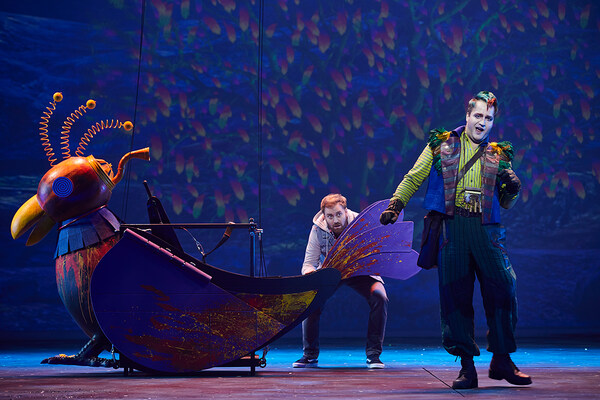
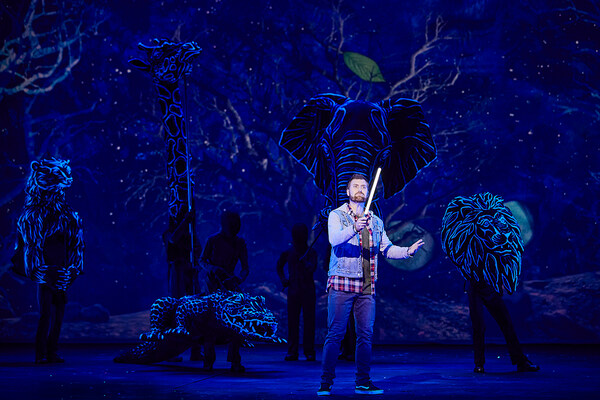
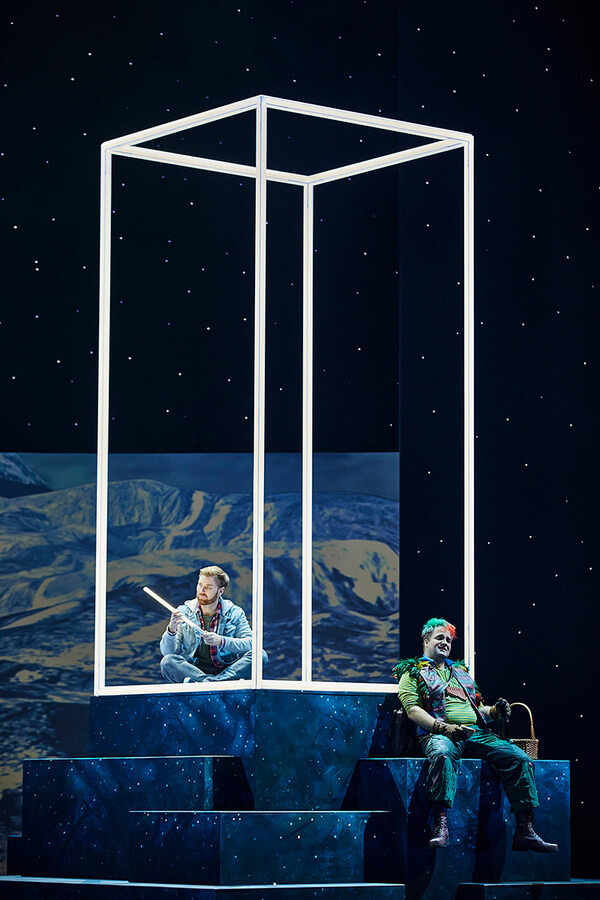
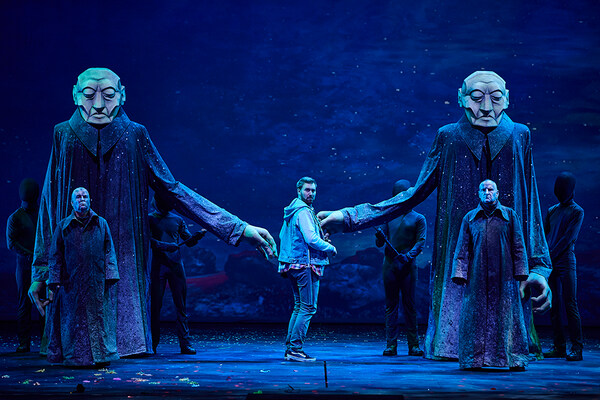
In answer to Tamino’s question about who he is, Papageno says »A man like you«. Tamino’s reply to the counter-question is that he comes from »princely blood«. Thus it is clear from the word go that while the bird-catcher Papageno has true humanity, this is something still lacking in Tamino. While this goal is truly noble, the pathway to achieving it is humorous, playful and, one could say, humane. As described by the libretto, the protagonists undergo various trials, encounter hell’s vengeance and the sweetest love, meet dancing animals and child-spirits, until Tamino and Pagageno finally reach their happy goal. On the one hand, Wolfgang Amadeus Mozart’s last opera »The Magic Flute«, which premiered in Vienna in 1791, follows the venerable tradition of Viennese magical theatre.
On the other hand, Mozart and his librettist Emanuel Schikaneder were also inspired by the Enlightenment ideas of the Freemasons to create a blend of crazy buffoonery and Masonic symbolism, striking misogyny and the deepest humanity, all infused with heavenly music. These elements make »The Magic Flute« the successful opera that has been enjoyed by each generation and is still beloved today.
Storyline
Act one
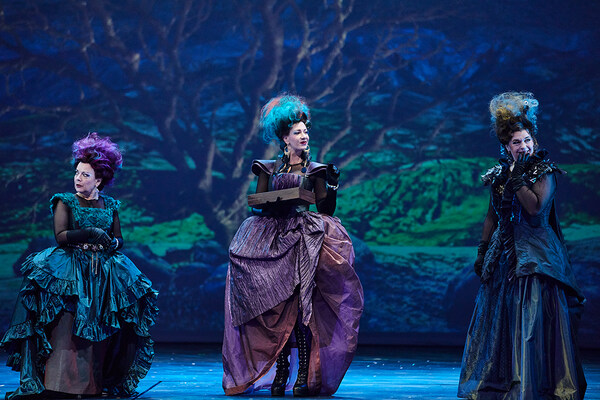
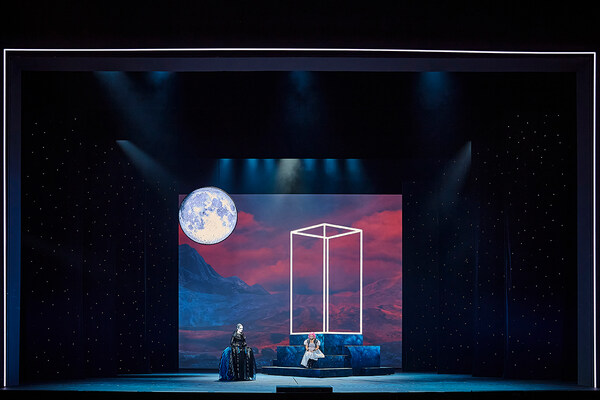
Prince Tamino is being pursued by a wild serpent. At the last minute, he is saved by three mysterious ladies who have been sent by the queen of the night. When the bird catcher Papageno appears and boasts about the heroic deed they punish him. In contrast, they give the prince a portrait of Pamina, the daughter of the queen who is being held captive by the ruler of the temple of the sun, Sarastro. Tamino falls in love with her. The queen appears in person and orders him to rescue Pamina together with Papageno. A magic flute will protect him from any danger whilst a reluctant Papageno is given magic bells. Guided by three young boys, they set off on their way to Sarastro’s temple. Whilst the temple guards tell Tamino that Sarastro is not the evil tyrant that the queen has depicted, Papageno finds Pamino and tries to flee with her. With the help of the chimes, he is able to distract her guard Monostatos although his efforts are scuppered by the appearance of Sarastro. Papageno, Pamina and Tamino have to stay in Sarastro’s kingdom as Sarastro has something greater planned for Tamino: just as he has taken Pamina into his kingdom to protect her from her mother, he plans to get Tamino into his circle of insiders of the sun temple and, in this way, prepare him for future tasks.
Act two
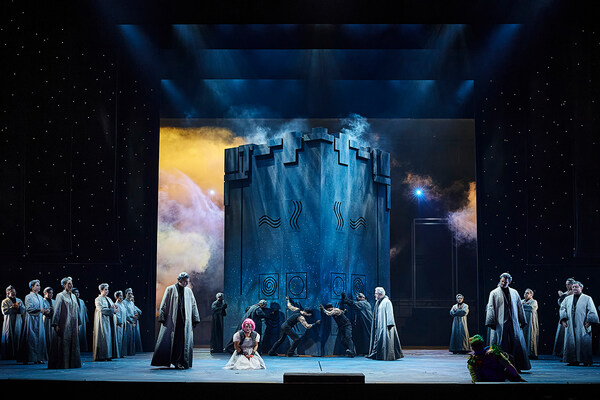
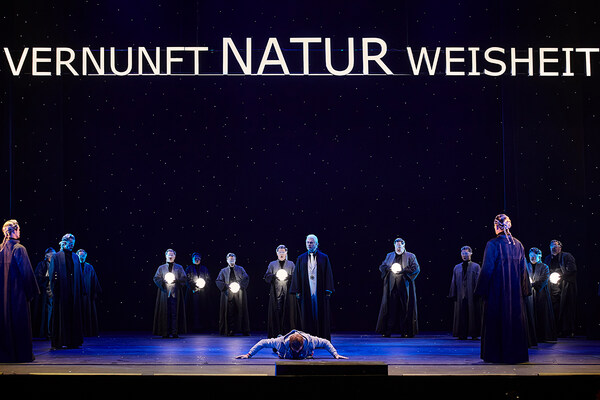
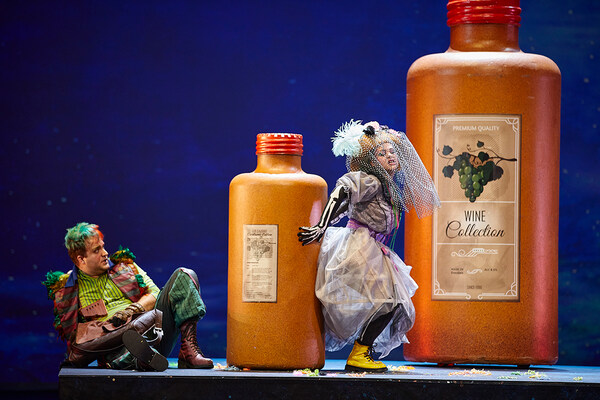
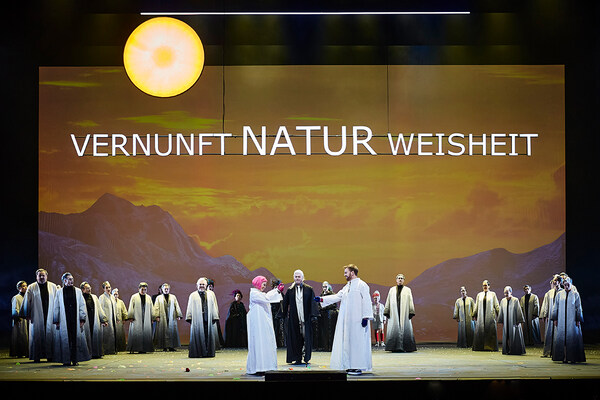
Tamino and Papageno are challenged to undergo various trials to prove that they are fit to be accepted into the circle of insiders. Firstly, they have to learn to remain silent which is difficult, particularly for Papageno. When an elderly woman appears, he is unable to keep this up and asks her what her name is. She then disappears with a clap of thunder. Papageno comforts himself with food and drink which is miraculously served to them both. Only Tamino remains silent and plays his flute for solace. Pamina appears but cannot understand why Tamino is no longer speaking to her. Her mother – the queen of the night – had previously tried in vain to persuade her to murder Sarastro. When, in her despair, she tries to take her life, the three young boys snatch the dagger away from her and lead her back to Tamino. Together they face the final test, the fire and water challenge. Protected by the magic sounds of the flute, they pass the test. Meanwhile, Papageno, in his loneliness, wishes that the elderly lady reappears and promises her that he will take her as his wife “as long as he doesn’t find anyone better”. She then transforms into a beautiful young girl but is taken away from him as the time has not yet come. Out of despair, Papageno wants to take his life but the three young boys remind him of the bells. The sound makes Papagena appear and both dream of a future with many children. The other couple is also happy: Tamino and Pamina, as future rulers, are accepted into the group of insiders and glorify the ideals of nature, wisdom and reason. Only the queen of the night comes to a bad ending: when she tries to enter the temple with her entourage, she is engulfed by the powers of darkness.
Explore
The Magic Flute