Melodramma in three acts
Libretto by Francesco Maria Piave
Performed in Italian with German and English surtitles
Premiere
2. October 2022,
No further performances in the current season.
Please note: Some biographies reflect the information available at the time of the respective premiere date and are not necessarily updated on an ongoing basis.
Premiere cast
- Conductor Nicholas Carter, Clelia Cafiero
- Staging Barbora Horáková
- Set Design Eva-Maria van Acker
- Costume Design Annemarie Bulla
- Lighting Design Fabio Antoci
- Video Sarah Derendinger
- Choreography Juanjo Arqués
- Choir Jan Hoffmann
- Dramaturgy Juliane Schunke
- Violetta Valéry Adela Zaharia, Martina Russomanno
- Alfredo Germont Amitai Pati
- Giorgio Germont George Gagnidze
- Flora Bervoix Štěpánka Pučálková, Winona Martin
- Gastone Timothy Oliver
- Barone Douphol Danylo Matviienko
- Marchese d'Obigny Vladyslav Buialskyi
- Dottore Grenvil Martin-Jan Nijhof
- Annina Dalia Medovnikov, Natasha Gesto
- Giuseppe, Diener Violettas Frank Blümel, Ingolf Stollberg-da Silva
- Diener Floras Reinhold Schreyer-Morlock, Woo Ram Lim
- Dienstbote Holger Steinert, Alexander Födisch
- Conférencier Anton Wagner, Lorenz Hoffmann
Sächsischer Staatsopernchor Dresden
Sächsische Staatskapelle Dresden
Sächsische Staatskapelle Dresden
Generously supported by the Semperoper Foundation
Explore
Stücktrailer
La traviata
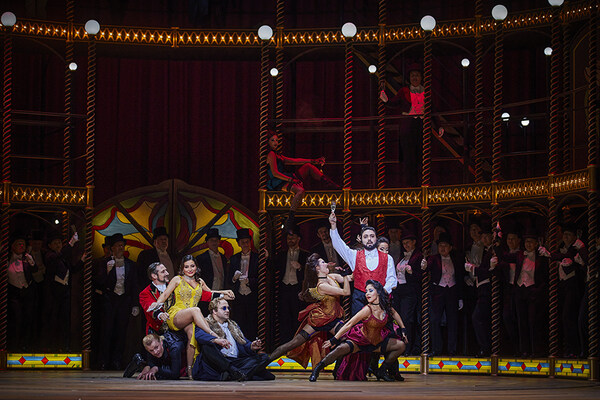
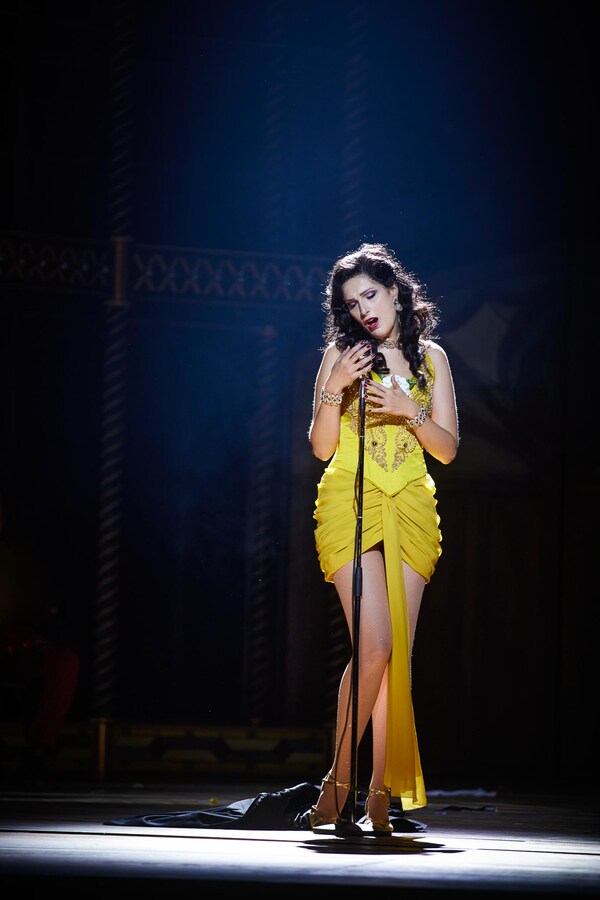
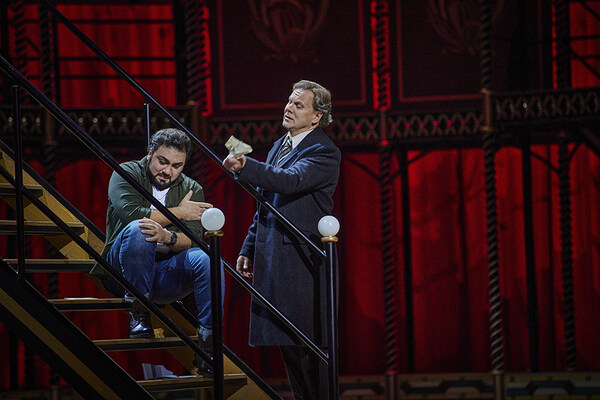
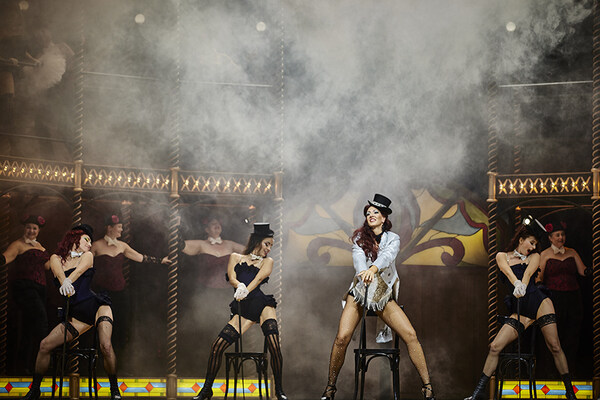
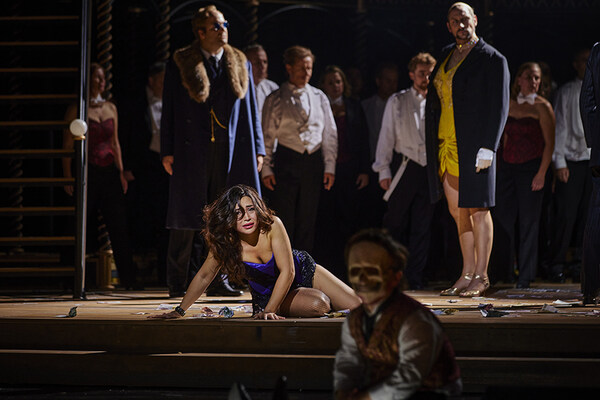
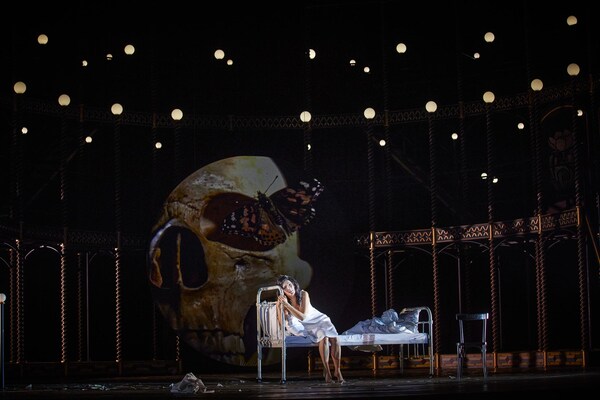
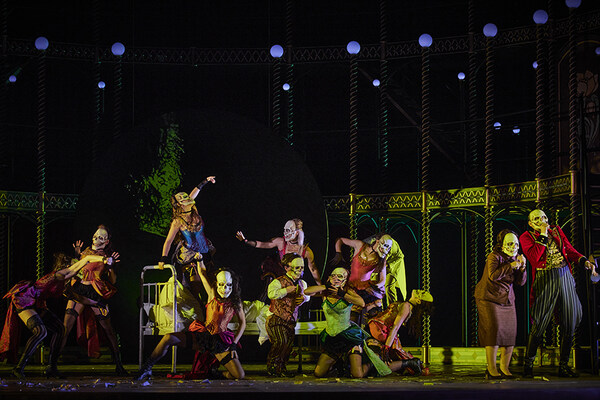
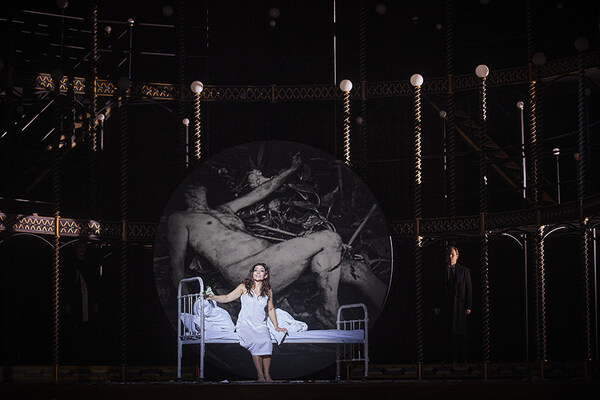
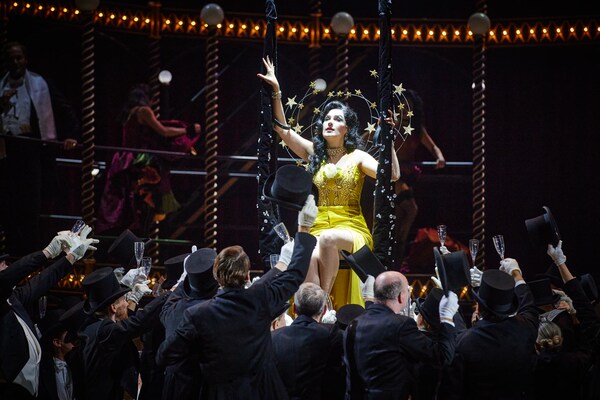
La traviata–directly translated as the one who has lost her way–is, of course, the Parisian courtesan Violetta Valéry. Already dying from an incurable lung disease, she falls in love with Alfredo Germont. Yet her feelings are in conflict with her way of life and all sense of reason; ultimately, her quest for freedom and happiness is defeated by the moral strictures of bourgeois society. When first performed in Venice in 1853, this story was considered scandalous: an opera about a courtesan who dies of tuberculosis and is also modelled on a real-life woman in Parisian society was an outrageous inno-vation for the time. Focusing on the complex relationship between Violetta, her lover Alfredo and his father Giorgio, Giuseppe Verdi created a captivating and fully-rounded character, expressed through music that shifts between lyrical bel canto passages and powerful musico-dramatic outbursts. Director Barbora Horáková Joly places La traviata in the dazzling world of 19th-century vaudeville.
Making-of
Addio del passato
Leonardo Sini talks about the challenge of finding his own approach to the music of such a well-known opera as La traviata. A key aspect of his interpretation is performing Violetta’s aria „Addio del passato“ in its entirety, rather than cutting the second strophe as is customary.
Making-of
Violetta in the cabaret
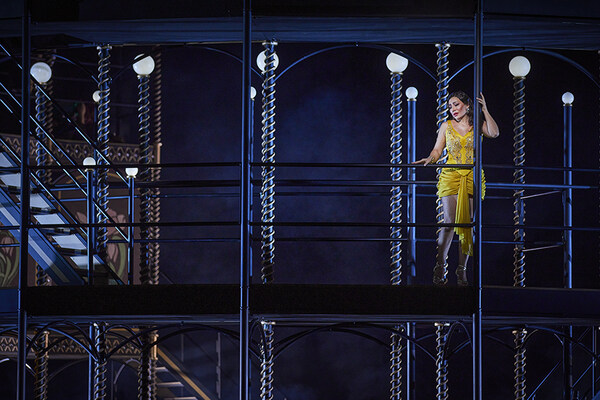
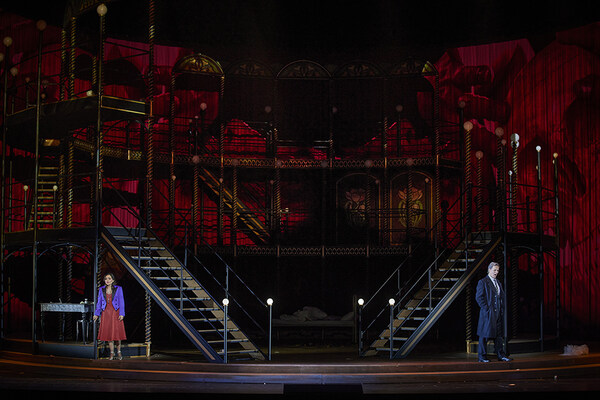
Eva-Maria van Acker, Barbora Horáková and Adela Zaharia discuss the unique stage design and realistic staging.
Making-of
Violetta’s story
For Stage Director Barbora Horáková Joly, the fascinating plot about Violetta Valéry’s story is the question of life in the awareness of death: What would we do if we were really aware that our time is limited? Violetta experiences real love in her last weeks of life, something she never thought she would be granted. The enormous emotional chaos that follows, her struggle between love and society, make her such an exciting and challenging character.
Gallery