Favola in musica in one prologue and five acts
Libretto by Alessandro Striggio
Performed in Italian with German and English supertitles
Premiere
30. April 2023,
No further performances in the current season.
Please note: Some biographies reflect the information available at the time of the respective premiere date and are not necessarily updated on an ongoing basis.
Premiere cast
- Conductor Wolfgang Katschner
- Choreographie Esther Balfe
- Lighting Design Fabio Antoci
- Choir Jonathan Becker
- Dramaturgy Benedikt Stampfli
- Staging Nikolaus Habjan
- Set Design Jakob Brossmann
- Costume Design Cedric Mpaka
- Mitarbeit Kostüm Lugh Amber Wittig
- Euridice Sofia Savenko, Anastasiya Taratorkina
- La Speranza (Die Hoffnung) Georg Bochow, Eric Jurenas
- Caronte Markus Suihkonen, Bogdan Talos
- A Nymph N.N., Rosalia Cid, Christiane Hossfeld
- Puppenspieler JARNOTH, Max Konrad, Johann Ebert, Angelo Konzett, Manuela Linshalm, Anderson Pinheiro da Silva
- La Musica (Die Musik) Alice Rossi
- Orfeo Rolando Villazón
- The Messenger Štěpánka Pučálková
- Proserpina Ute Selbig
- Plutone Tilmann Rönnebeck
- Apollo Simeon Esper
- Eco (Echo) Alice Rossi
- 1. Hirte Justyna Ołów
- 2. Hirte Aaron Pegram
- 3. Hirte Joseph Dennis, Antonio Sapio
- 4. Hirte Ilya Silchuk
- 1. Geist Aaron Pegram
- 2. Geist Joseph Dennis, Antonio Sapio
- 3. Geist Ilya Silchuk
Sächsischer Staatsopernchor Dresden
lautten compagney BERLIN
Project Partners: Sparkassen-Finanzgruppe Sachsen, Ostsächsische Sparkasse Dresden, Sparkassen-Versicherung Sachsen, LBBW
Explore
Stücktrailer
L’Orfeo
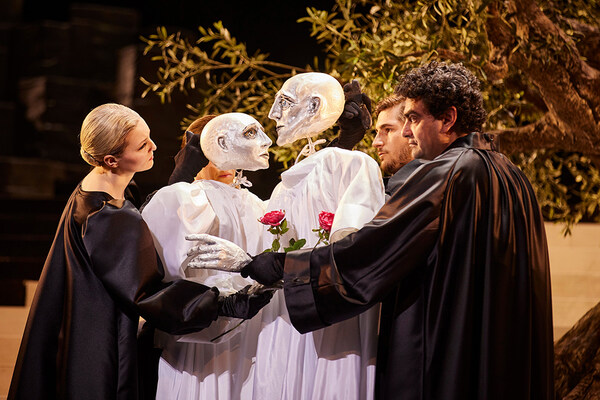
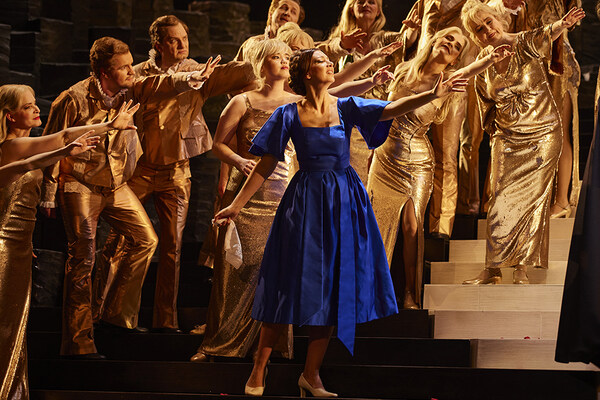
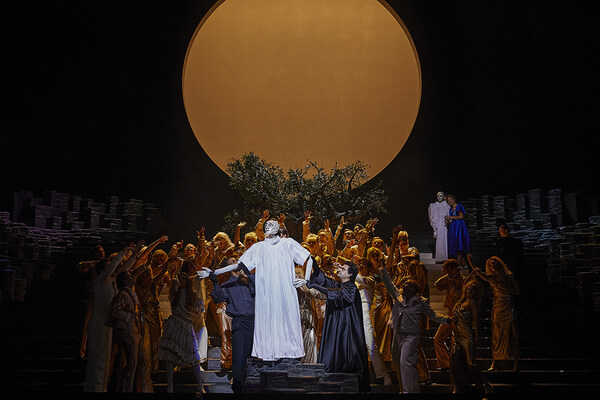
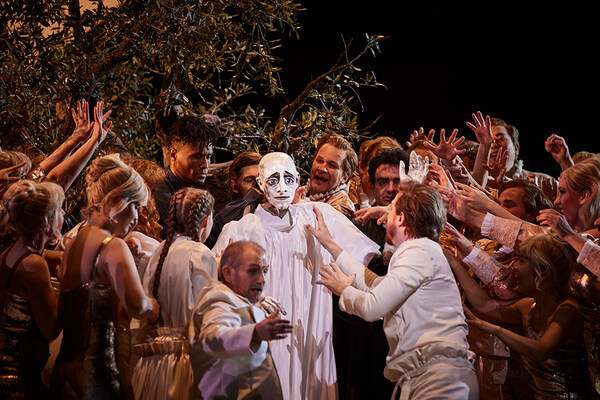
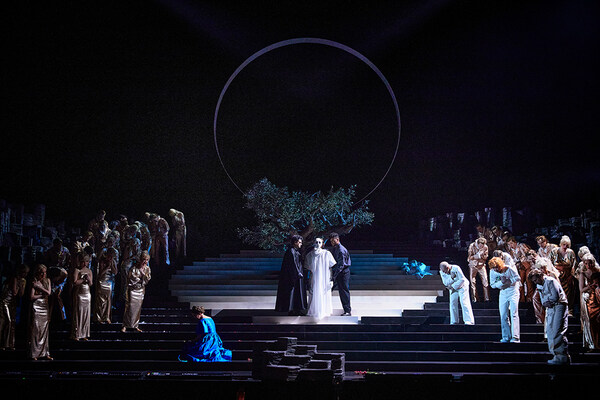
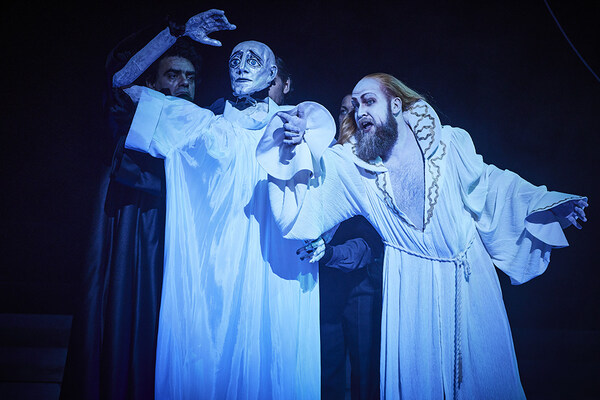
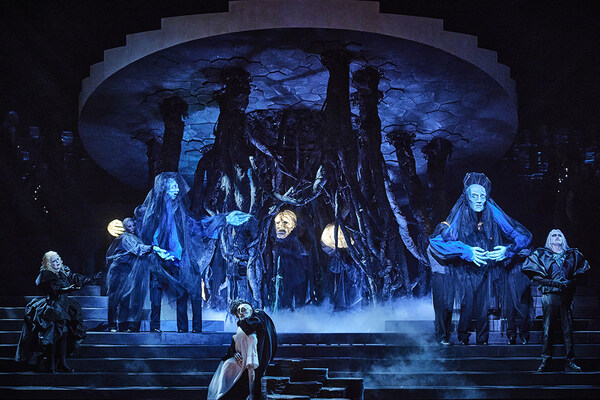
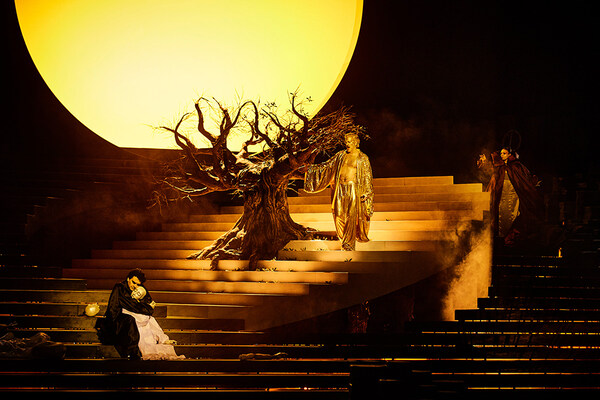
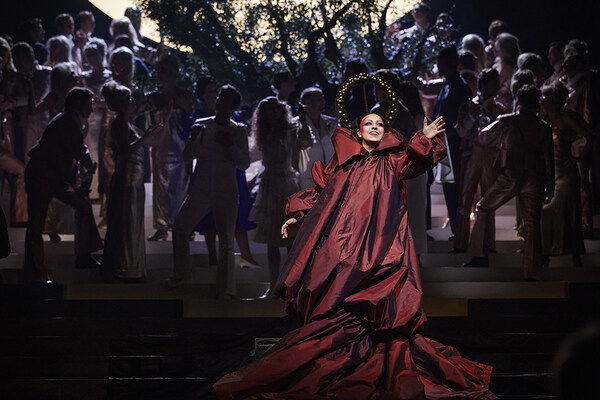
Orpheus sings to vanquish death, hoping to save his dead wife from the underworld. And so it is entirely fitting that the history of opera should begin with a work celebrating the power of music. The premiere of Claudio Monteverdi’s L’Orfeo on 24 February 1607 is regarded as the birth of musical theatre. In the Semperoper, Monteverdi’s opera about the power and impotence of music can now be experienced for the first time in a new production of the original version. The conductor and lutenist Wolfgang Katschner will bring the score to life together with his orchestra lautten compagney BERLIN with period instruments. Director and puppeteer Nikolaus Habjan, a shooting star of the Austrian theatre scene, will stage the work with a mixture of singing actors and life-size puppets.
Making-of
L’Orfeo – Making-of (3)
One sound for the upper world and one sound for the lower world, five trombones, strings rich in overtones, cornetts, recorders and a baroque harp with three parallel string levels – in the latest making-of, Wolfgang Katschner, musical director of the lautten compagney BERLIN, and harpist Johanna Seitz introduce the basic features of the period instruments the orchestra will play during our performance series of L’Orfeo .
L’Orfeo – Making-of (2)
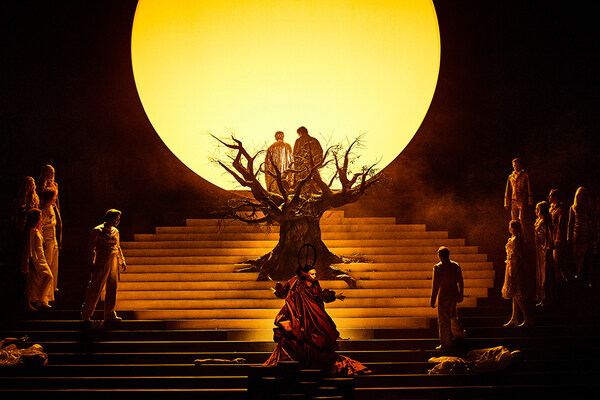
In Claudio Monteverdi’s opera L’Orfeo the poet Orpheus wants to bring back his beloved wife Euridice from the underworld. The decisive question for set designer Jakob Brossmann is therefore how to represent the upper world and underworld on the opera stage. For Nikolaus Habjan’s new staging of L’Orfeo, Jakob Brossmann has designed an olive tree as the main element, which takes root in the underworld and grows into the upper world, bringing life back from death as a symbol of nature.
Making-of
L’Orfeo – Making-of (1)
Director and puppeteer Nikolaus Habjan stages the baroque opera L’Orfeo–an opera that is more than 400 years old, based on a story that is more than 2,000 years old and is about nothing less than life and death. For Nikolaus Habjan, puppet theater is the form of theater that comes closest to depicting life and death: with puppets, he can portray life and death more truthfully.
Gallery