
A lyrical fairy-tale in three acts
Libretto by Jaroslav Kvapil
Performed in Czech with German and English supertitles
Premiere
7. May 2022,
No further performances in the current season.
Please note: Some biographies reflect the information available at the time of the respective premiere date and are not necessarily updated on an ongoing basis.
Premiere cast
- Conductor Joana Mallwitz
- Staging Christof Loy
- Staged by Johannes Stepanek
- Set Design Johannes Leiacker
- Costume Design Ursula Renzenbrink
- Lighting Design Bernd Purkrabek
- Choreography Klevis Elmazaj
- Choir Jonathan Becker
- Dramaturgy Juliane Schunke
- Der Prinz Pavel Černoch
- Die fremde Fürstin Elena Guseva
- Rusalka Olesya Golovneva
- Der Wassermann Alexandros Stavrakakis
- Die Hexe Christa Mayer
- Der Wildhüter Sebastian Wartig
- Der Küchenjunge Nicole Chirka
- Erste Nymphe Ofeliya Pogosyan
- Zweite Nymphe Štěpánka Pučálková
- Dritte Nymphe Constance Heller
- Ein Jäger Simeon Esper
Sächsischer Staatsopernchor Dresden
Sächsische Staatskapelle Dresden
Sächsische Staatskapelle Dresden
Dancers
A co-production with the Teatro Real Madrid, the Teatro Comunale di Bologna, the Gran Teatre del Liceu Barcelona and the Palau de les Arts Reina Sofía, Valencia
Explore
Stücktrailer
Rusalka
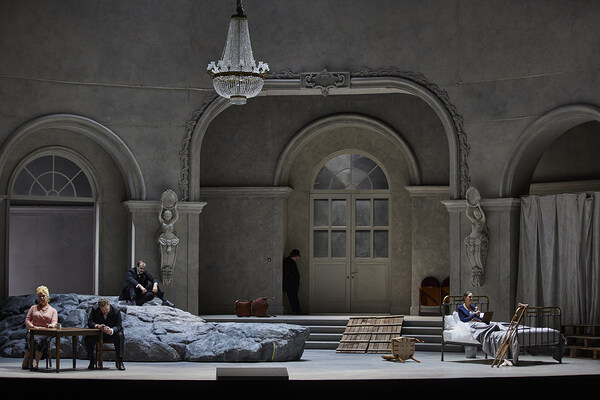
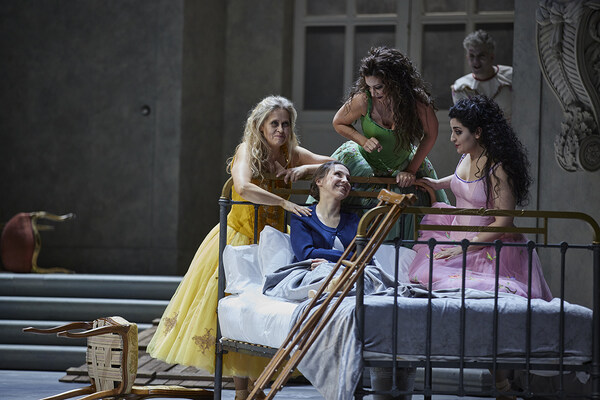
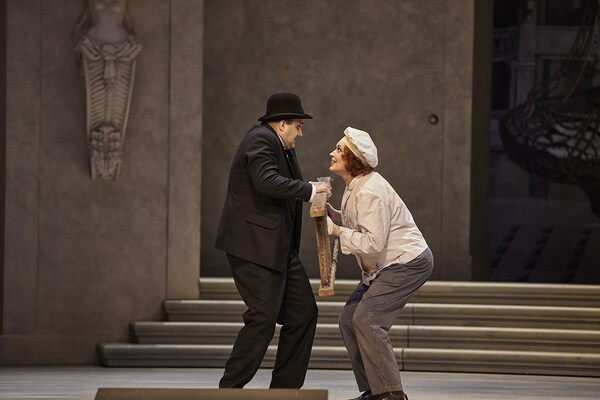
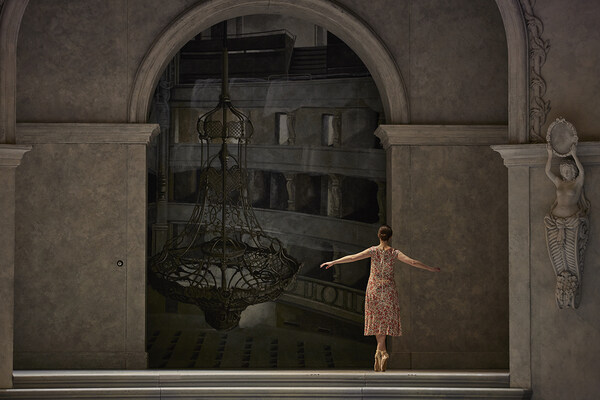
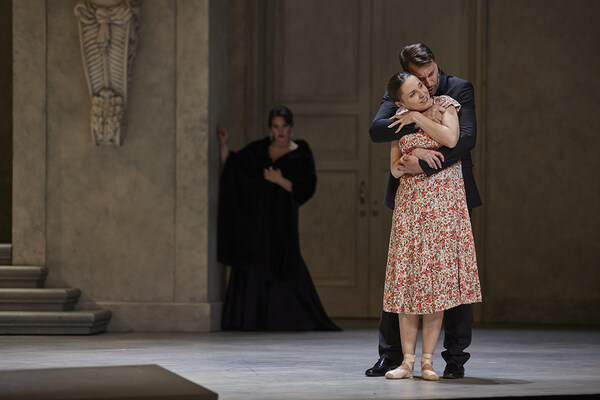
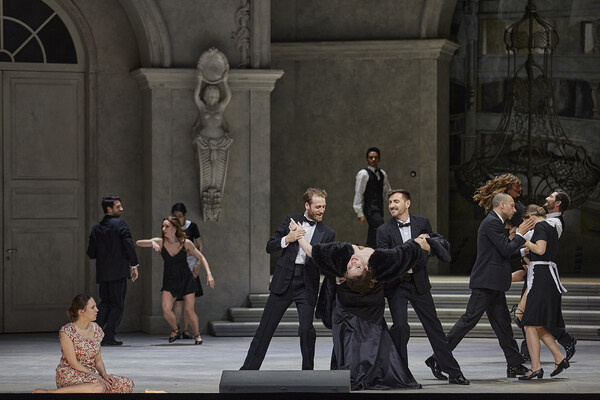
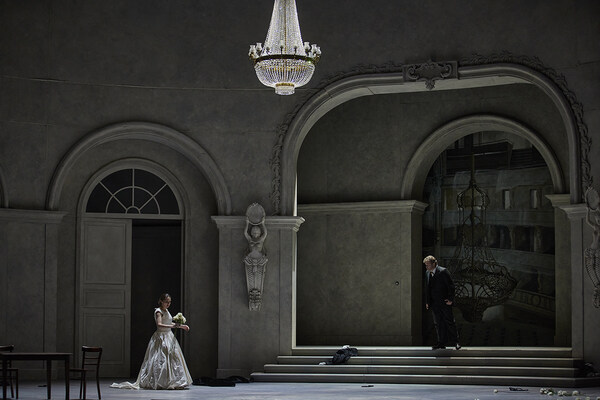
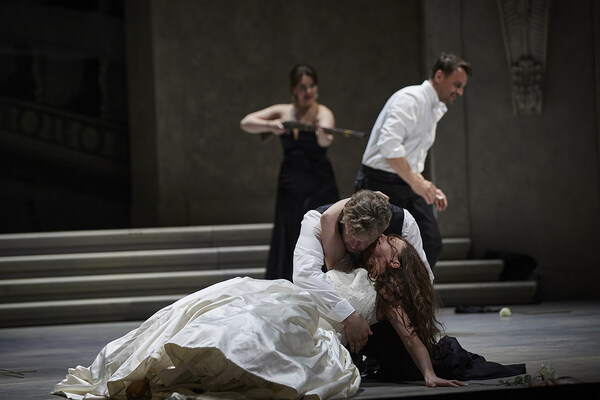
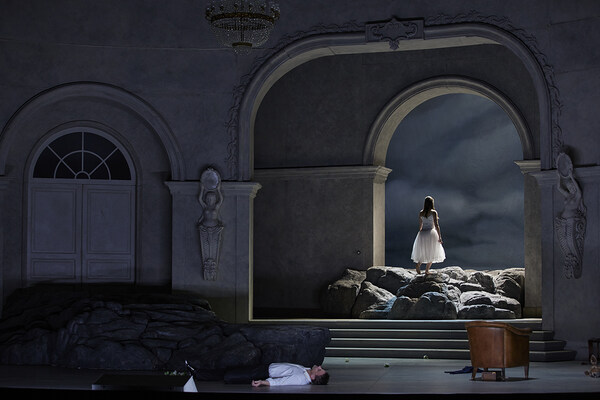
Having fallen in love with the Prince, the water nymph Rusalka wishes to become human in order to be with him forever. The witch Ježibaba demands that Rusalka give up her voice for this transformation, whereupon she leaves her home and family. Arriving in the world of the humans, Rusalka initially enraptures the prince; yet the magical, voiceless creature remains something of a stranger in this new society, and eventually her lover turns away from her – which means death for him and banishment for her. With great dramatic feeling, Dvořák’s music for his fairy-tale opera (which premiered in Prague in 1901) contrasts the world of the ghostly, swirling underwater kingdom with the stiff formalities of the royal court. The international stage director Christof Loy will make his debut at the Semperoper with this allegorical study of the significance of one’s own identity and the meaning of the human soul, illustrated by the transformation of the main character Rusalka from a romantic water nymph to a suffering, loving human who lacks a real home.
Gallery
Picture gallery
Making-of
Rusalka – Making-of (2)
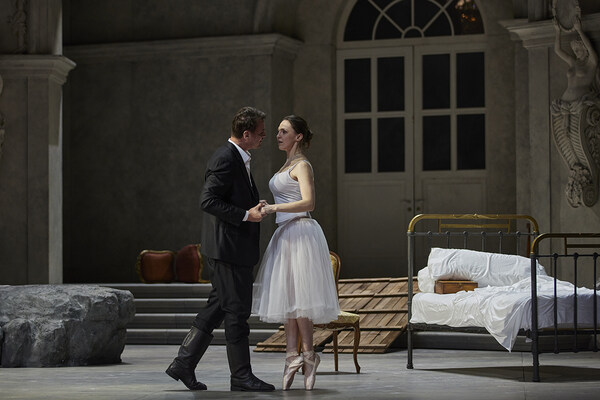
Olesya Golovneva has already sung the role of Rusalka at the Teatro Real in Madrid, the Frankfurt Opera and the Cologne Opera, where she was nominated for the German theater award FAUST for her interpretation. In Christof Loy’s production, the soprano is not only able to display her acting and singing skills, but also to dance in pointe shoes–a new and exciting experience for her. Just as the role of Rusalka itself is very exciting for Olesya Golovneva: Rusalka sings, speaks, loses her voice and finally has to express herself in a completely different way. For the singer, the end of the opera despite all tragedy offers the way to freedom, because Rusalka has no other choice, since she cannot die.
Making-of
Rusalka – Making-of (1)
The Czech tenor Pavel Černoch has already sung the Prince in Rusalka in a wide variety of productions and jokes that honest love is apparently not really worth it. He appreciates his stage partners Olesya Golovneva (Rusalka) and Elena Guseva (Die fremde Fürstin) as fantastic singers and the concept of director Christof Loy for its faithfulness to the libretto.