Freedom! This production of Fidelio from 1989 is one pinnacle in the history of opera in Dresden.
Opera in two acts by Ludwig van Beethoven
Libretto by Josef Sonnleithner, Stephan von Breuning und Georg Friedrich Treitschke
Performed in German with German and English surtitles (Spoken dialogue is not translated word for word.)
Premiere
7. October 1989
Dates & Cast
- Conductor Finnegan Downie Dear
- Inszenierung nach Christine Mielitz
- Set & Costumes Peter Heilein
- Lighting Design Friedewalt Degen
- Choir Jan Hoffmann
- Dramaturgy Wolfgang Pieschel
- Florestan John Matthew Myers (03., 10., 18. April 2027), David Butt Philip (23. April, 02. May 2027)
- Don Pizarro Simon Neal
- Leonore Eleanor Lyons
- Marzelline Rosalia Cid
- Rocco Georg Zeppenfeld
- Jaquino Mario Lerchenberger
- Don Fernando Vladyslav Buialskyi (03., 10. April, 02. May 2027), Neven Crnić (18., 23. April 2027)
- Erster Gefangener Jörg Reißmann, Torsten Schäpan
- Zweiter Gefangener Norbert Klesse (03., 10., 18., 23. April, 02. May 2027), Holger Steinert (03., 10., 23. April, 02. May 2027)
- Conductor Finnegan Downie Dear
- Inszenierung nach Christine Mielitz
- Set & Costumes Peter Heilein
- Lighting Design Friedewalt Degen
- Choir Jan Hoffmann
- Dramaturgy Wolfgang Pieschel
Sinfoniechor Dresden – Extrachor der Semperoper Dresden
Sächsische Staatskapelle Dresden
- Florestan John Matthew Myers
- Don Pizarro Simon Neal
- Leonore Eleanor Lyons
- Marzelline Rosalia Cid
- Rocco Georg Zeppenfeld
- Jaquino Mario Lerchenberger
- Don Fernando Vladyslav Buialskyi
- Erster Gefangener Jörg Reißmann, Torsten Schäpan
- Zweiter Gefangener Norbert Klesse, Holger Steinert
- Conductor Finnegan Downie Dear
- Inszenierung nach Christine Mielitz
- Set & Costumes Peter Heilein
- Lighting Design Friedewalt Degen
- Choir Jan Hoffmann
- Dramaturgy Wolfgang Pieschel
Sinfoniechor Dresden – Extrachor der Semperoper Dresden
Sächsische Staatskapelle Dresden
- Florestan John Matthew Myers
- Don Pizarro Simon Neal
- Leonore Eleanor Lyons
- Marzelline Rosalia Cid
- Rocco Georg Zeppenfeld
- Jaquino Mario Lerchenberger
- Don Fernando Vladyslav Buialskyi
- Erster Gefangener Jörg Reißmann, Torsten Schäpan
- Zweiter Gefangener Norbert Klesse, Holger Steinert
- Conductor Finnegan Downie Dear
- Inszenierung nach Christine Mielitz
- Set & Costumes Peter Heilein
- Lighting Design Friedewalt Degen
- Choir Jan Hoffmann
- Dramaturgy Wolfgang Pieschel
Sinfoniechor Dresden – Extrachor der Semperoper Dresden
Sächsische Staatskapelle Dresden
- Florestan John Matthew Myers
- Don Pizarro Simon Neal
- Leonore Eleanor Lyons
- Marzelline Rosalia Cid
- Rocco Georg Zeppenfeld
- Jaquino Mario Lerchenberger
- Don Fernando Neven Crnić
- Erster Gefangener Jörg Reißmann, Torsten Schäpan
- Zweiter Gefangener Norbert Klesse
- Conductor Finnegan Downie Dear
- Inszenierung nach Christine Mielitz
- Set & Costumes Peter Heilein
- Lighting Design Friedewalt Degen
- Choir Jan Hoffmann
- Dramaturgy Wolfgang Pieschel
Sinfoniechor Dresden – Extrachor der Semperoper Dresden
Sächsische Staatskapelle Dresden
- Florestan David Butt Philip
- Don Pizarro Simon Neal
- Leonore Eleanor Lyons
- Marzelline Rosalia Cid
- Rocco Georg Zeppenfeld
- Jaquino Mario Lerchenberger
- Don Fernando Neven Crnić
- Erster Gefangener Jörg Reißmann, Torsten Schäpan
- Zweiter Gefangener Norbert Klesse, Holger Steinert
- Conductor Finnegan Downie Dear
- Inszenierung nach Christine Mielitz
- Set & Costumes Peter Heilein
- Lighting Design Friedewalt Degen
- Choir Jan Hoffmann
- Dramaturgy Wolfgang Pieschel
Sinfoniechor Dresden – Extrachor der Semperoper Dresden
Sächsische Staatskapelle Dresden
- Florestan David Butt Philip
- Don Pizarro Simon Neal
- Leonore Eleanor Lyons
- Marzelline Rosalia Cid
- Rocco Georg Zeppenfeld
- Jaquino Mario Lerchenberger
- Don Fernando Vladyslav Buialskyi
- Erster Gefangener Jörg Reißmann, Torsten Schäpan
- Zweiter Gefangener Norbert Klesse, Holger Steinert
In brief
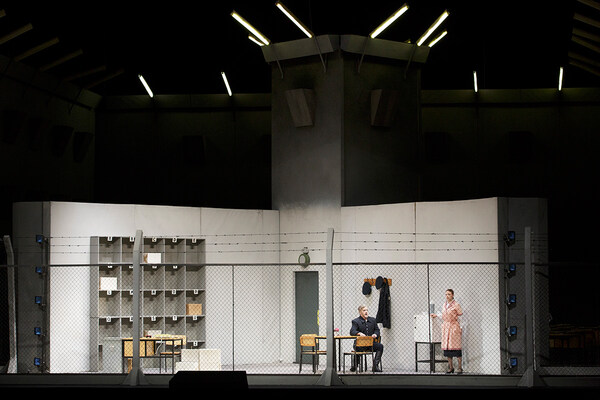
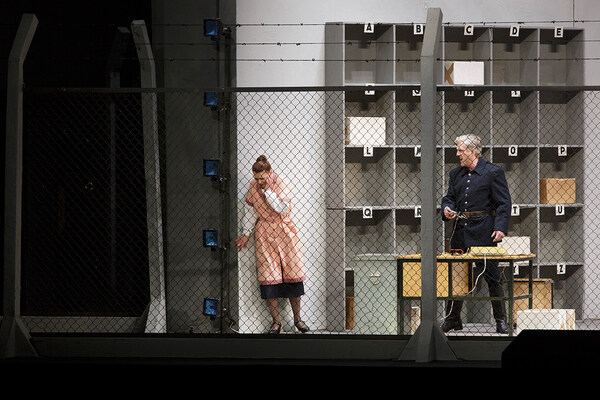
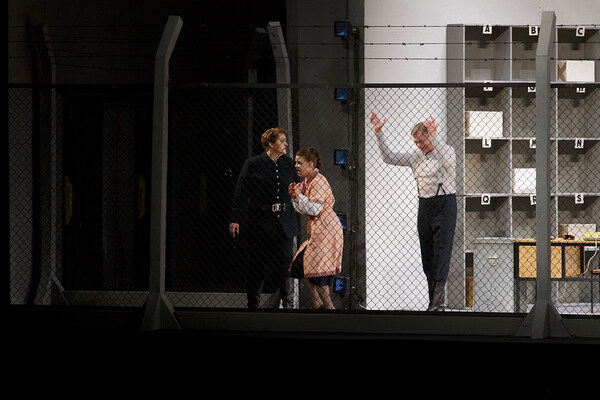
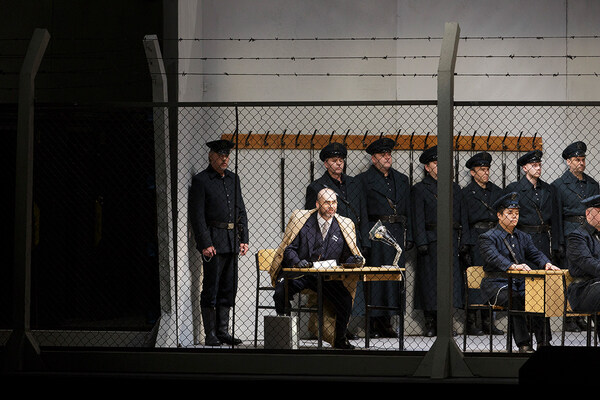
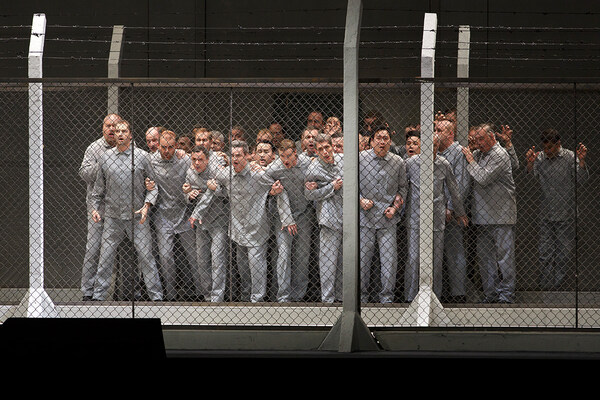
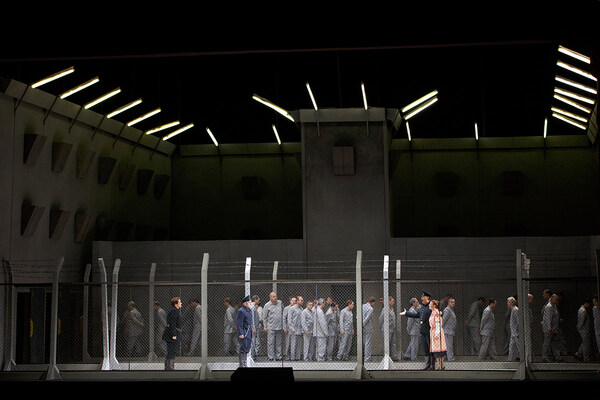
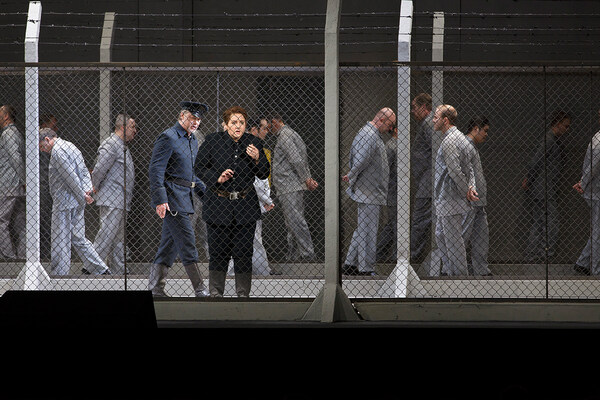
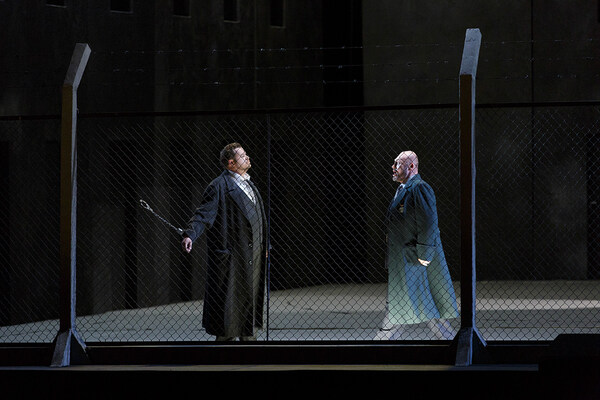
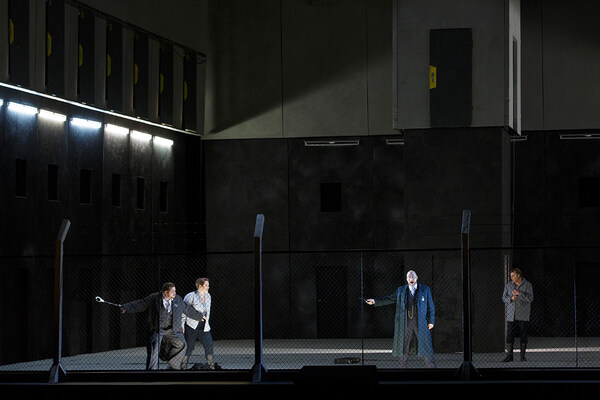
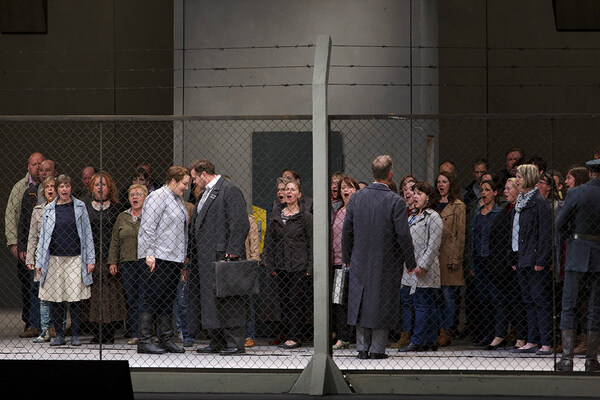
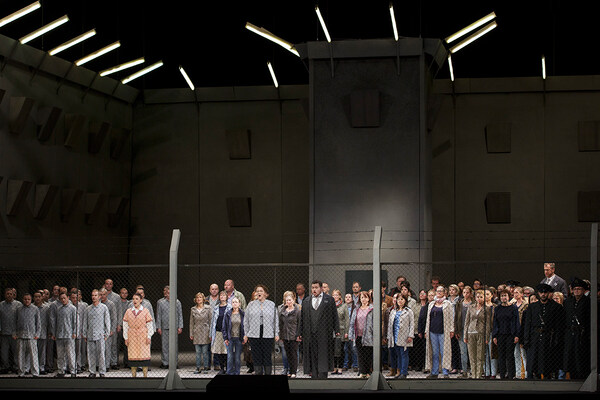
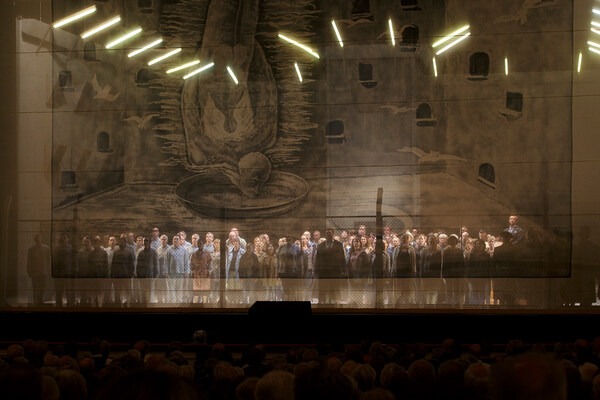
Christine Mielitz’s production of Beethoven’s »Fidelio« celebrated its premiere on 7 October 1989. While local citizens took to the streets in front of the Semperoper in support of democracy and human rights, the director placed this »opera of liberation« in a contemporary prison courtyard featuring a surveillance tower and barbed wire. At a time of revolution, terror and war, Ludwig van Beethoven wrote his opera about a woman who, disguised as a man, tries to rescue her husband from illegal incarceration in a secret prison. In the story, the heroism of Leonore is juxtaposed with the banal world of the prison warden Rocco; simultaneously, grand opera is contrasted with German Singspiel. At the end comes liberation, delineated by Beethoven in almost superhuman, utopian music. More than three decades after its premiere, this Dresden production of »Fidelio« from 1989 has lost none of its intensity.
Storyline
Leonore has assumed the name of Fidelio to penetrate into the prison where Florestan, her husband, is kept prisoner. She manages to be employed as a prison warder.
First scene
Marzelline, the daughter of Rocco, the prison master, refuses Jaquino's proposal of marriage. She loves Fidelio. By her betrothal to Marzelline, Leonore hopes to get Rocco's help for penetrating into the underground sections. Rocco on his turn hopes for relieving his conscience by making Fidelio an accessory. Pizarro, the governor, gets a warning that a surprising inspection is planned by the minister. He decides to put to death Florestan, his political adversary and only unlawful prisoner. He needs Rocco's help to execute this plan. Leonore asks Rocco to release the prisoners from the lighter prisons where she supposes her husband. Rocco gives permission to do so. — As Pizarro gets to hear about it, he orders all prisoners to be immediately locked again.
Second scene
After two years of solitary confinement, Florestan's resistance threatens to break down. Rocco and Leonore open the cistern which is planned to be the grave for the secret prisoner. Leonore is ready and willing to save the stranger. She recognizes him to be her husband. As Pizarro tries to eliminate his adversary, she prevents this murder. As the minister's arrival is announced, Pizarro has to welcome him. Leonore and Florestan are together again without knowing their fate. Don Fernando, the minister, orders all prisoners to be brought before him and issues a general amnesty. Rocco accuses Pizarro of attempted murder. Pizarro has to resign. The minister takes up the appeal made by the people in declaring it his original intention.
Explore
Fidelio