Second day of Der Ring des Nibelungen
Libretto by the composer
Performed in German with German and English surtitles
Premiere
23. March 2003,
No further performances in the current season.
Please note: Some biographies reflect the information available at the time of the respective premiere date and are not necessarily updated on an ongoing basis.
Premiere cast
- Conductor Christian Thielemann
- Staging Willy Decker
- Set Design Wolfgang Gussmann
- Costume Design Wolfgang Gussmann, Frauke Schernau
- Dramaturgy Klaus Bertisch
- Siegfried Andreas Schager
- Mime Jürgen Sacher
- Der Wanderer John Lundgren, Thomas J. Mayer
- Alberich Markus Marquardt
- Fafner Stephen Milling
- Erda Christa Mayer
- Brünnhilde Ricarda Merbeth
- Waldvogel Mirella Hagen
Sächsische Staatskapelle Dresden
Co-production with the Teatro Real Madrid
Made possible by the Daimler AG
An initiative supported by the Semperoper Foundation
Explore
Stücktrailer
Siegfried
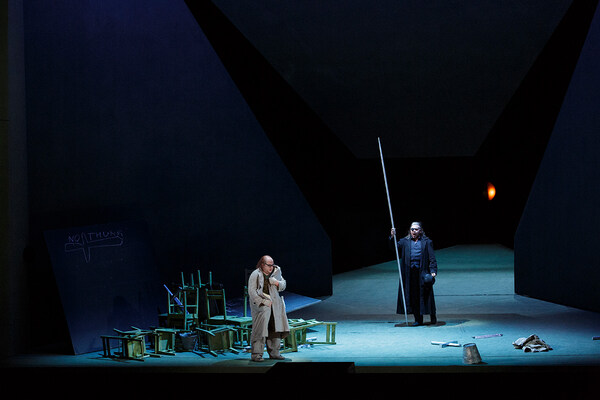
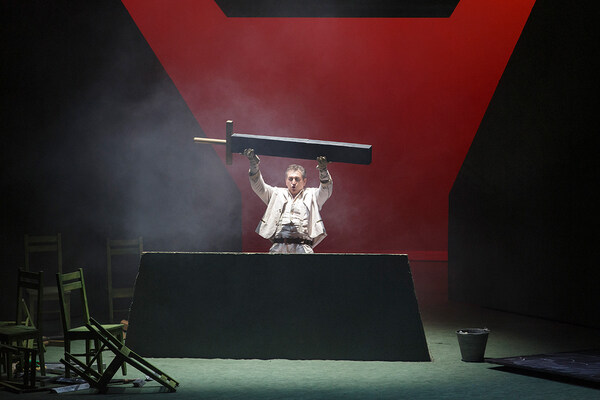
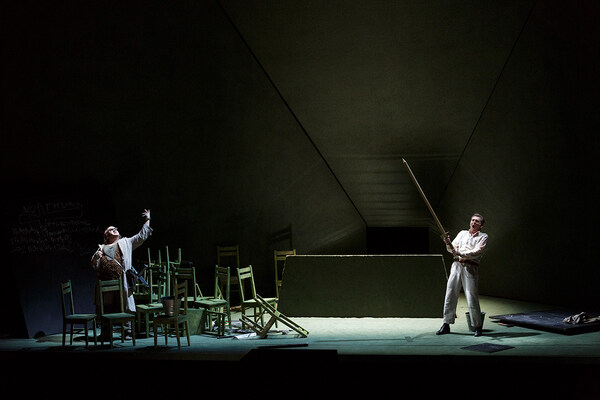
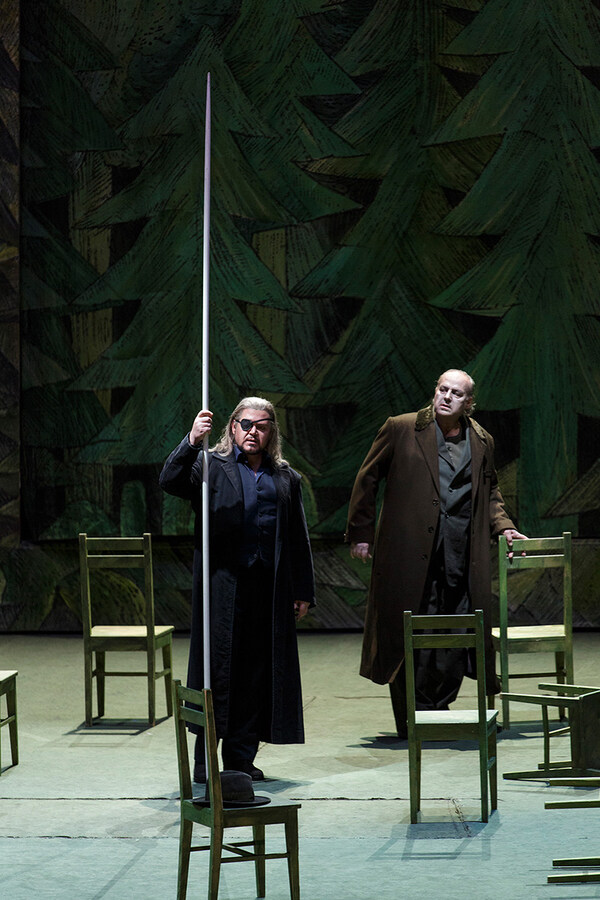
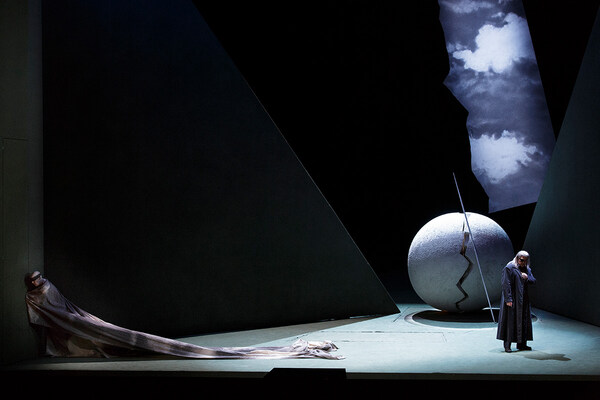
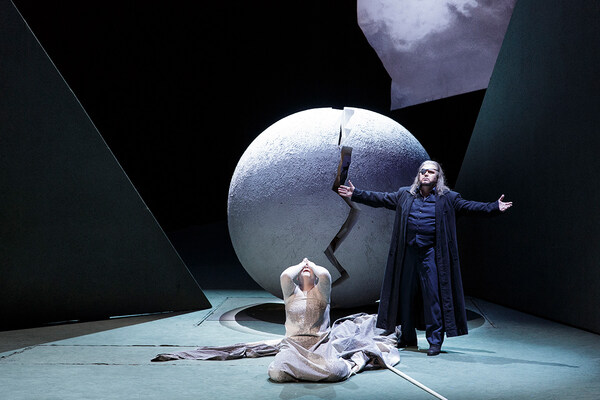
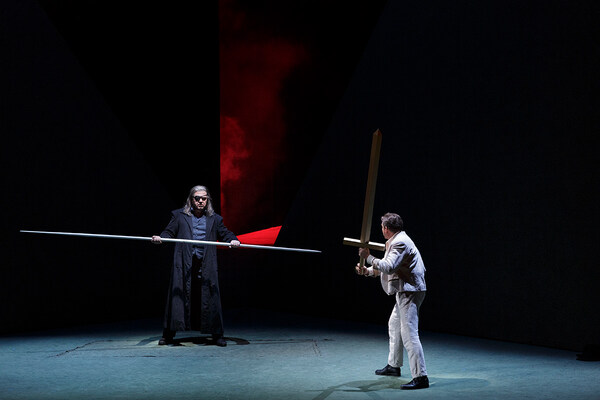
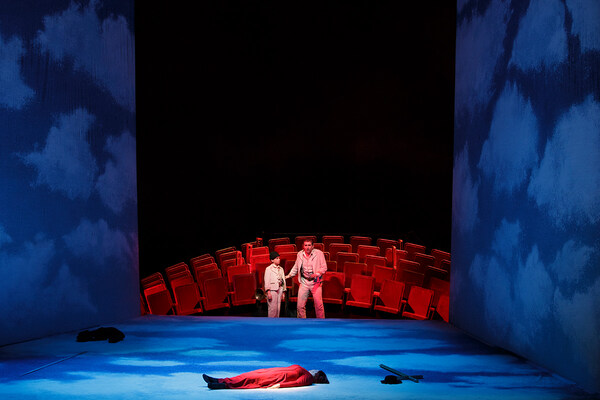
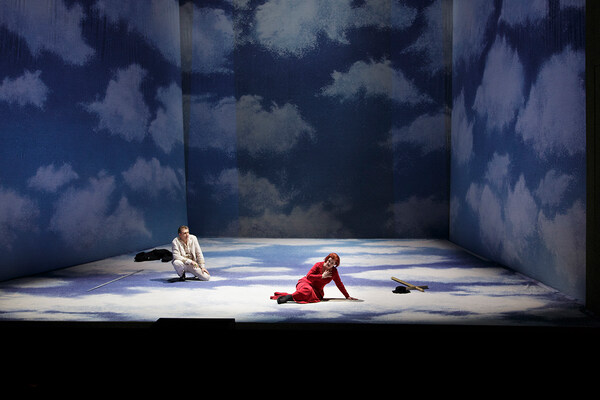
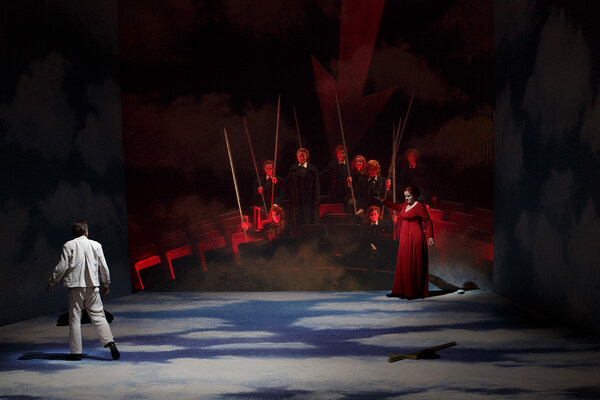
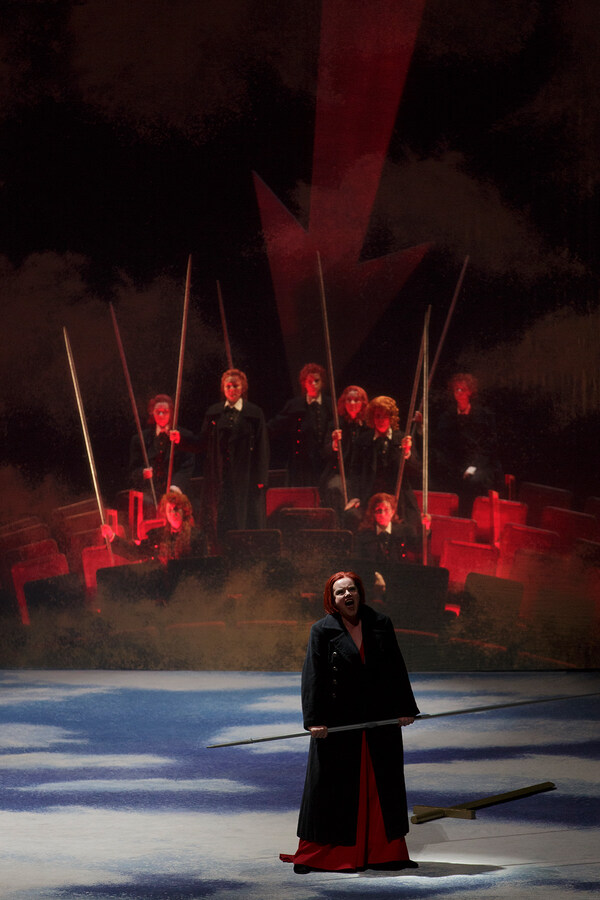
Following the rescue of Sieglinde and the death of Siegmund, as told in Die Walküre, their son Siegfried grows up at the edge of the world with Mime, the brother of Alberich. The dwarf hopes that Siegfried will obtain for him the powerful ring in battle. But the ignorant Siegfried turns against his father: After he has killed the giant Fafner and taken the ring, he also murders Mime. Led by a woodbird, he awakens the sleeping Brünnhilde. Now the two have the power to save Wotan’s world of the gods – but love is stronger than political rationality. Siegfried is the most visually dramatic part of Wagner’s Ring of the Nibelung cycle, inspiring director Willy Decker to create a theatre within a theatre for his Dresden production. However, it is unclear who is taking the role of the observer and who is being observed – until the drama detaches itself completely from the stage and seems to advance towards the audience.
Gallery