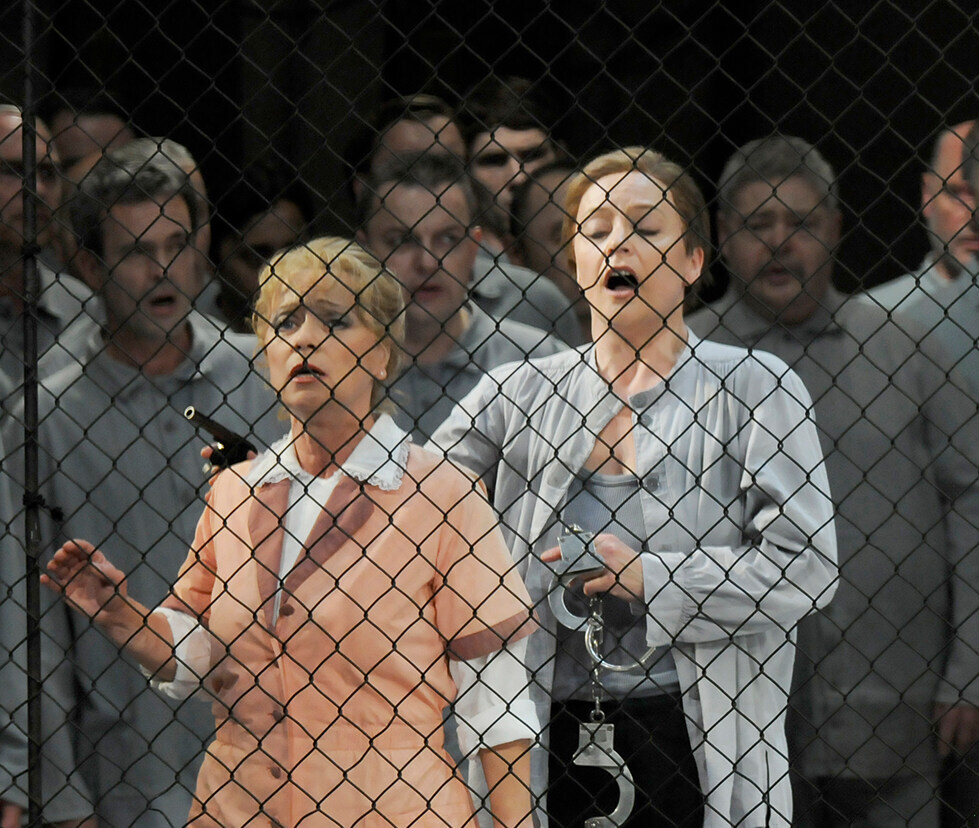
A strong woman fights for freedom, justice, and truth.
Fatto storico in two acts
Libretto by Giuseppe Maria Foppa and Giacomo Cinti based on the French libretto Léonore, ou L’amour conjugal (1798) by Jean Nicolas Bouilly
Performed in Italian with German and English surtitles
Premiere
24. April 2027
Dates & Cast
- Conductor Giulio Cilona
- Staging Andrea Moses
- Set Design Raimund Bauer
- Costume Design Anja Rabes
- Video Ilya Shagalov
- Lighting Design Bernd Purkrabek
- Dramaturgy Michael Höppner
- Don Fernando Simeon Esper
- Don Pizarro N.N.
- Florestano Jonah Hoskins
- Leonora Louise McClelland Jacobsen
- Rocco Peter Kellner
- Marcellina Jasmin Delfs
- Giacchino Anton Beliaev
- Conductor Giulio Cilona
- Staging Andrea Moses
- Set Design Raimund Bauer
- Costume Design Anja Rabes
- Video Ilya Shagalov
- Lighting Design Bernd Purkrabek
- Dramaturgy Michael Höppner
- Don Fernando Simeon Esper
- Don Pizarro
- Florestano Jonah Hoskins
- Leonora Louise McClelland Jacobsen
- Rocco Peter Kellner
- Marcellina Jasmin Delfs
- Giacchino Anton Beliaev
- Conductor Giulio Cilona
- Staging Andrea Moses
- Set Design Raimund Bauer
- Costume Design Anja Rabes
- Video Ilya Shagalov
- Lighting Design Bernd Purkrabek
- Dramaturgy Michael Höppner
- Don Fernando Simeon Esper
- Don Pizarro
- Florestano Jonah Hoskins
- Leonora Louise McClelland Jacobsen
- Rocco Peter Kellner
- Marcellina Jasmin Delfs
- Giacchino Anton Beliaev
- Conductor Giulio Cilona
- Staging Andrea Moses
- Set Design Raimund Bauer
- Costume Design Anja Rabes
- Video Ilya Shagalov
- Lighting Design Bernd Purkrabek
- Dramaturgy Michael Höppner
- Don Fernando Simeon Esper
- Don Pizarro
- Florestano Jonah Hoskins
- Leonora Louise McClelland Jacobsen
- Rocco Peter Kellner
- Marcellina Jasmin Delfs
- Giacchino Anton Beliaev
- Conductor Giulio Cilona
- Staging Andrea Moses
- Set Design Raimund Bauer
- Costume Design Anja Rabes
- Video Ilya Shagalov
- Lighting Design Bernd Purkrabek
- Dramaturgy Michael Höppner
- Don Fernando Simeon Esper
- Don Pizarro
- Florestano Jonah Hoskins
- Leonora Louise McClelland Jacobsen
- Rocco Peter Kellner
- Marcellina Jasmin Delfs
- Giacchino Anton Beliaev
- Conductor Giulio Cilona
- Staging Andrea Moses
- Set Design Raimund Bauer
- Costume Design Anja Rabes
- Video Ilya Shagalov
- Lighting Design Bernd Purkrabek
- Dramaturgy Michael Höppner
- Don Fernando Simeon Esper
- Don Pizarro
- Florestano Jonah Hoskins
- Leonora Louise McClelland Jacobsen
- Rocco Peter Kellner
- Marcellina Jasmin Delfs
- Giacchino Anton Beliaev
- Conductor Giulio Cilona
- Staging Andrea Moses
- Set Design Raimund Bauer
- Costume Design Anja Rabes
- Video Ilya Shagalov
- Lighting Design Bernd Purkrabek
- Dramaturgy Michael Höppner
- Don Fernando Simeon Esper
- Don Pizarro
- Florestano Jonah Hoskins
- Leonora Louise McClelland Jacobsen
- Rocco Peter Kellner
- Marcellina Jasmin Delfs
- Giacchino Anton Beliaev
And more
In brief
What are you prepared to risk your life for? In order to track down her husband, Florestano, Leonora sneaks into a prison disguised as a man. Florestano is being held captive by the vengeful Governor Don Pizzarro, whom he once exposed for corruption. A race between life and death begins …
Ferdinando Paër’s (1771–1839) Leonora ossia L’amor coniugale, which premiered at Dresden’s Kleines Kurfürstliches Theater in 1804, is – like Beethoven’s Fidelio – based on the then immensely popular libretto Léonore by Jean-Nicolas Bouilly, which itself was allegedly inspired by a true event occurring during the French Revolution. In Paër’s realistic yet tragicomic portrayal, marital love triumphs over political tyranny, and the established social order over revolutionary upheaval. Regardless of the work’s plea for stability, the desire to uncover the truth and to make real change remain vibrantly alive.